
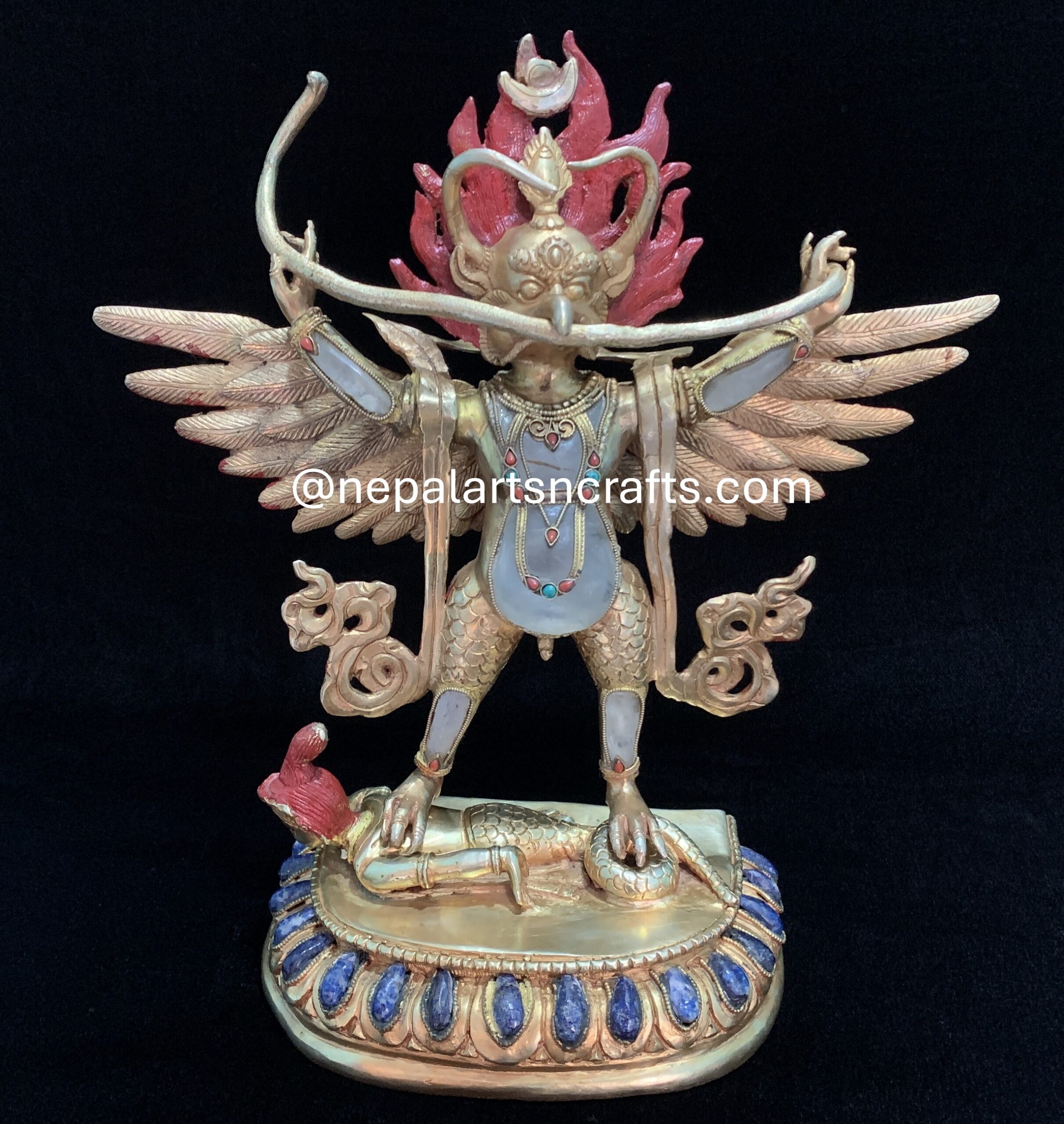
Garuda

The Mythical Megastar Soaring Through Time and Culture

The Original Apex Predator, King of Birds, and a Divine Mount.

I. Introduction: Meet Garuda, The Original Apex Predator

Forget your fire-breathing dragons and self-immolating phoenixes for a moment! Let’s turn our gaze skyward to Garuda – the colossal, divine eagle-like sun bird. This being has been ruling not just the skies, but also hearts and minds for millennia.

More than just a mythical beast plucked from an ancient bestiary, Garuda is a spiritual superhero, the original apex predator, the ultimate “king of birds,” and a ride fit for a god (specifically, Vishnu!). Think of him as the celestial equivalent of a high-performance vehicle.

Prepare to dive into a tale of strength, devotion, and a rather serious rivalry with snakes. It’s a story that’s both deeply rooted in ancient lore and surprisingly relevant to our modern anxieties.

II. Ancient Wings: Garuda’s Epic Origin Story

  • From Ancient Whispers to Epic Tales: Garuda’s origins are as vast and varied as the skies he commands. He can be traced back to the Vedas as Śyena, the swift eagle who snatches divine nectar, a symbol of aspiration and attainment. The name “Garuda” itself hints at his powerful nature, derived from the Sanskrit root meaning “to devour,” reflecting his formidable strength.
  • The Mahabharata Saga: The Mahabharata unveils a dramatic narrative: Garuda’s birth and his heroic quest for amrita (the elixir of immortality). This wasn’t for personal gain; it was to free his enslaved mother, Vinata. Such profound filial devotion underscores a central theme in Garuda’s mythology – sacrifice for those you love.
  • A Feathery Evolution: Over centuries, Garuda’s image underwent a fascinating transformation. Initially depicted as a purely giant bird, he gradually evolved into the iconic “bird-man” – a being with a human body, but retaining the eagle’s head, wings, and talons. This anthropomorphic shift reflects a nuanced understanding: divinity manifesting in a form relatable to humanity. Art, it seems, evolved as rapidly as the myth traveled across continents.
  • Why the Snake Beef? The legendary wager between his mother, Vinata, and her sister Kadru (the mother of the Nagas) is the root of this eternal conflict. This single bet, born of deception, ignited a rivalry that continues to resonate in art, mythology, and even modern interpretations of overcoming inner demons.

III. Global Glamour: Garuda’s Influence Across Faiths

  • Hinduism’s High-Flyer: In Hinduism, Garuda isn’t just a powerful figure; he’s the ultimate vahana (mount) of Lord Vishnu, one of the principal deities. He is the visible manifestation of courage, speed, and unwavering protection. More profoundly, he symbolizes the journey of the individual “self” (Atman) toward the “Supreme Self” (Paramatman). In essence, Garuda is Vishnu’s personal, divinely-engineered jet, effortlessly traversing cosmic distances.
  • Buddhist Bird of Wisdom: Buddhism also embraces Garuda, portraying him as a golden-winged protector. He’s often depicted listening to Buddha’s sermons, an embodiment of attentiveness and receptivity to wisdom. Furthermore, he remains a fierce foe of the snakey Nagas, symbolizing the enlightened mind that conquers negativity and ignorance.
  • Jainism’s Guardian Spirit: Jainism features Garuda as a yaksha (guardian spirit) for Tirthankara Shantinatha. Here, he offers unwavering support, power, and protection against evil influences. This cross-religious adoption speaks to Garuda’s universal appeal as a symbol of strength and safeguarding.

IV. Modern Marvel: Garuda in Today’s World

National Hero Status

  • Indonesia’s Proud Emblem: The “Garuda Pancasila” is more than just a national symbol; it embodies the very essence of Indonesia’s identity. He represents freedom, strength, justice, and the nation’s “Unity in Diversity” philosophy. You’ll find him everywhere, from government buildings to the national airline – a constant reminder of the nation’s aspirations.
  • Thailand’s Royal Icon: In Thailand, Garuda holds a sacred position as a symbol of the monarchy. He represents the king’s protective role and divine authority, a visual embodiment of the nation’s deep-rooted traditions.
  • India’s Military Might: Even the Indian Air Force’s Garud Commando Force has adopted Garuda as their namesake, a testament to his enduring image as a symbol of strength, vigilance, and aerial prowess.

Towering Tributes

The colossal Garuda Wisnu Kencana statue in Bali isn’t just a tourist attraction; it’s a monumental homage to this mythical figure, a physical manifestation of devotion on a grand scale.

Pop Culture’s New Wings

From traditional shadow puppet theater (wayang kulit) to modern films, literature, and video games, Garuda continues to capture the imagination of creators and audiences alike. His enduring presence in pop culture solidifies his status as a timeless icon.

V. Feathered Fights: The Debates and Different Strokes

  • Looks Can Be Deceiving (or Diverse!): Why does Garuda appear so different depending on geographic location and artistic interpretation? The debate between zoomorphic (all bird) and anthropomorphic (bird-man) depictions continues. The varying colors, from gold to red, further complicate the visual representation. These differences highlight the fluid nature of mythology, constantly adapting to cultural contexts.
  • Sacred vs. Swag: When does popular appropriation and commercialization begin to dilute the profound spiritual significance of Garuda? This is a crucial question in our increasingly interconnected world. Is there a clear line between genuine appreciation and outright exploitation?
  • National Narratives, Different Meanings: The contrast between Indonesia’s “Garuda Pancasila” (national strength, political stability) and Thailand’s Garuda (sacred, royal authority) reveals how a single symbol can carry distinct meanings within different national narratives.
  • The Problem with Old Texts: Inconsistent stories and varying interpretations abound in ancient Puranas. Even back then, it seems, people couldn’t agree on every detail, proving that the beauty of mythology often lies in its ambiguity.

VI. Beyond the Horizon: Garuda’s Flight into the Future

  • Archetype for Modern Times: Garuda is increasingly becoming a symbol for personal liberation. His story resonates with those seeking to overcome anxiety, gain a higher perspective on life’s challenges, and transform negative emotions into positive action. He embodies the inner spiritual warrior within us all.
  • Green Wings for the Planet: Emerging interpretations are linking Garuda to environmentalism and wildlife conservation, casting him as a protector of nature. This is a potent evolution, imbuing an ancient myth with contemporary relevance.
  • Keeping the Myth Alive: Efforts are underway to create new narratives and artistic representations to introduce Garuda to younger generations, ensuring that his legacy endures. This includes modernizing the storytelling while preserving the core values and symbolism.
  • Crossing Borders: Expect Garuda to influence more transnational cultural exchanges, spreading his powerful message even further. As the world becomes more interconnected, Garuda’s universal appeal will likely transcend geographical boundaries.
  • Real-World Airlines Soaring: Garuda Indonesia isn’t just a name; the airline itself has ambitious plans for fleet expansion and new routes, carrying the name proudly into the future sky! This demonstrates how the myth continues to inspire tangible endeavors.

VII. Conclusion: The Ever-Soaring Legend

From ancient texts to national emblems, from spiritual guide to pop culture icon, Garuda proves that some myths never truly fade. They evolve, adapt, and continue to inspire across generations.

He embodies strength, freedom, devotion, and a relentless spirit. So, next time you see an eagle soaring through the sky, remember the legendary Garuda – a symbol that continues to inspire and evolve, truly a megastar of myth.
Citipati

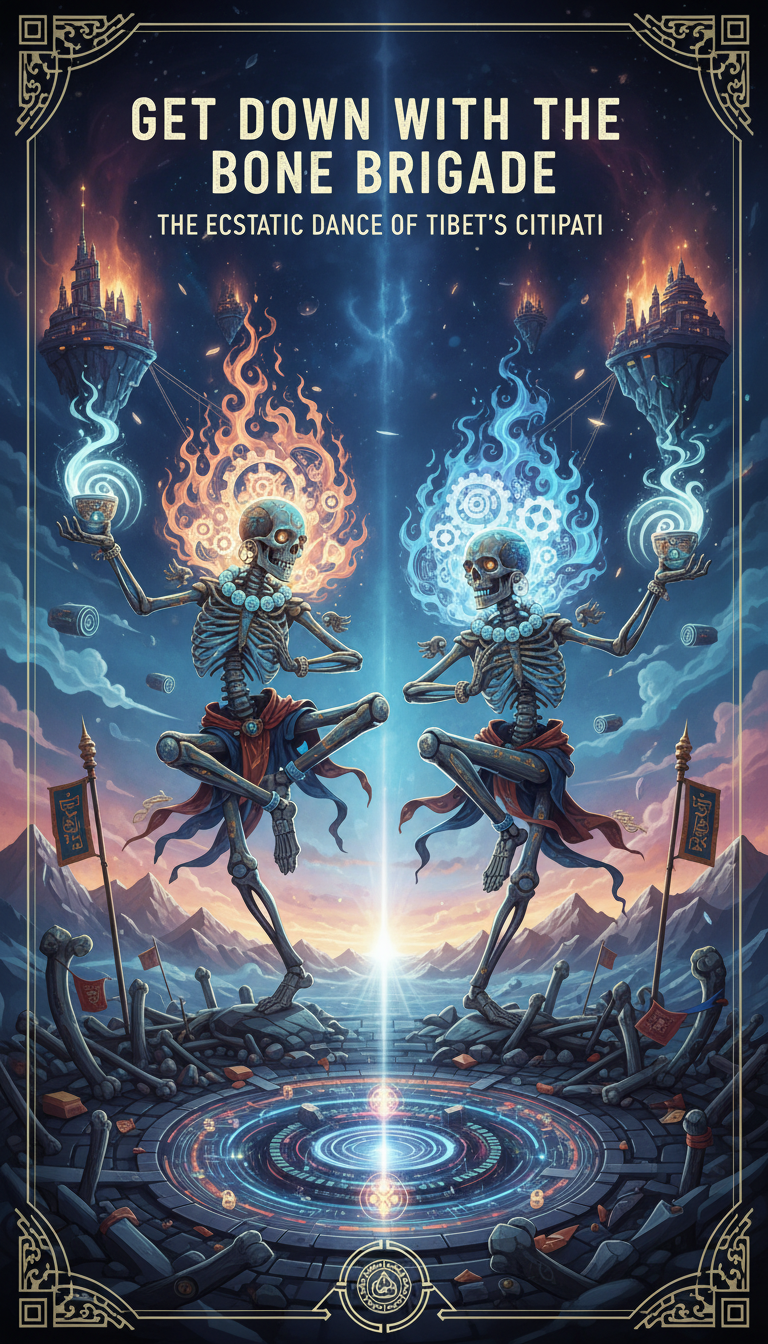
Get Down with the Bone Brigade: The Ecstatic Dance of Tibet’s Citipati

Unveiling the fierce and elegant skeletal protectors, the “Lords of the Charnel Ground,” and their profound message of liberation.

Imagine a dance so ancient, so resonant with the heartbeat of existence, that its performers are…skeletons. Not the ghoulish kind haunting Halloween aisles, but something far more profound. Meet the Citipati, the “Lords of the Charnel Ground,” fierce and elegant skeletal protectors from the heart of Tibetan Buddhism. Their dance is not a celebration of death, but a defiant embrace of freedom. Let’s delve into their story, their mesmerizing moves, and uncover why these bone-chilling figures might just warm your soul.

So, Who Exactly Are These Dancing Skeletons?

At their core, the Citipati are a dynamic duo: a male and female pair locked in perpetual, ecstatic dance. They are Dharmapalas, guardians of the Buddhist teachings, revered throughout Vajrayana Buddhism. Their very essence is a cosmic nudge, a reminder that life is fleeting, death an inevitable truth, and detachment the ultimate liberation.

Observe their dance; one leg is raised high, a gesture of transcendence, while the other remains grounded, tethered to the earthly realm. It’s the ultimate expression of balance – the delicate dance between life and death. And just to clarify, while we’re talking skeletons, these aren’t the dinosaur Citipati – a completely different entity, equally fascinating, but decidedly less inclined to dance.

“Death isn’t an ending here; it’s a dramatic costume change.”

– The Essence of Citipati

The Story of Bone Rhythms

The story of these bone rhythms stretches back through time, from ancient India to the roof of the world. These skeletal guardians journeyed from the wellsprings of Vajrayana Buddhism to become pivotal figures in Himalayan tradition. The origin story is…well, let’s call it vividly transformative. Legend speaks of two meditating monks, disturbed by a thief, who in a moment of unexpected spiritual combustion, transformed into eternal protectors. Death isn’t an ending here; it’s a dramatic costume change.

Then there’s Guru Padmasambhava, who in the 8th century, orchestrated a spiritual rave of sorts, bringing and adapting these “skeleton dances” to Tibet. His intention was never to instill fear, but to subdue evil and safeguard the Dharma. Monks keep this tradition alive, diligently performing elaborate “Tsam dances” twice a year in charnel grounds, accompanied by the haunting resonance of bone trumpets and the thunderous beat of drums. It’s a living, breathing meditation, a testament to the enduring power of ritual.

More Than Just Macabre Figures

But the Citipati are so much more than macabre figures. Their skeletal form, stripped bare of flesh and ego, lays bare the fundamental truth of impermanence. Their dance, “ecstatic” and “wild,” is a celebration of conquering fear, of finding freedom within the cycle of life, death, and rebirth. They are fierce protectors, spiritual bodyguards for practitioners, warding off ignorance and guiding souls through the treacherous Bardo, the in-between state.

Look closely at their iconography. The wisdom flames that lick around their skulls symbolize enlightenment emerging from the ashes of impermanence. The skull cups they hold may represent offerings, or perhaps a symbolic sip of wisdom. Their necklaces of human heads are trophies, emblems of conquered ego. And the union of male and female embodies the ultimate tantric dance of compassion and wisdom, a harmonious merging of opposing forces.

Misunderstood Guardians

Yet, these figures are often misunderstood, viewed through the lens of Western sensibilities as macabre or evil. Outsiders may perceive them as creepy or a bad omen, a complete misinterpretation of their benevolent, protective role. Their fierce appearance is a tool, a means to confront and ultimately dismantle fear, not to instill it.

It’s crucial to differentiate the Citipati from other skeleton dancers in the broader Cham tradition. They possess a unique narrative and distinct sacred duties. Intriguingly, there are no major internal debates or controversies surrounding their authentic meaning within Buddhist traditions. The challenges primarily revolve around educating those who haven’t yet grasped their profound significance.

Modern Echoes and Future Strides

The Citipati’s skeletal strides continue to reverberate in the modern world. The traditional rituals are meticulously preserved, particularly in Tibet, India, and Nepal. Monastic dance troupes are now taking their performances to international stages, sharing their culture, promoting the Dharma, and raising vital funds.

Western culture has also begun to embrace the Citipati, with their iconography appearing in meditation rooms, yoga studios, contemporary art, meaningful jewelry, and even tattoos. They’ve become more than just artistic representations; for many, they are living protectors. While preserving the sacred core, Tibetan dance is also evolving, with artists creating fusions that blend traditional moves with ballet, modern, and even street dance. Imagine a “Citipati hip-hop fusion” – perhaps not so far-fetched!

However, challenges remain: the immense cost of maintaining rituals, the potential loss of ancient dance manuals and the masters who hold them, and the delicate balance between cultural sharing and the risk of dilution into mere tourist spectacle. Yet, with dedicated monastics, a growing global interest in Tibetan spirituality, and creative adaptations, there is hope that these dancing skeletons will continue to inspire future generations with their timeless message.

Embrace the Ecstatic Freedom

The dance of the Citipati is a testament to the profound beauty and meaning that can be found in the most unexpected places. They challenge us to look beyond superficial appearances and embrace the full spectrum of existence, from the radiant heights of life to the shadowy depths of death. Their dance is an eternal invitation: release your fears, let go of your attachments, and discover your own ecstatic freedom.

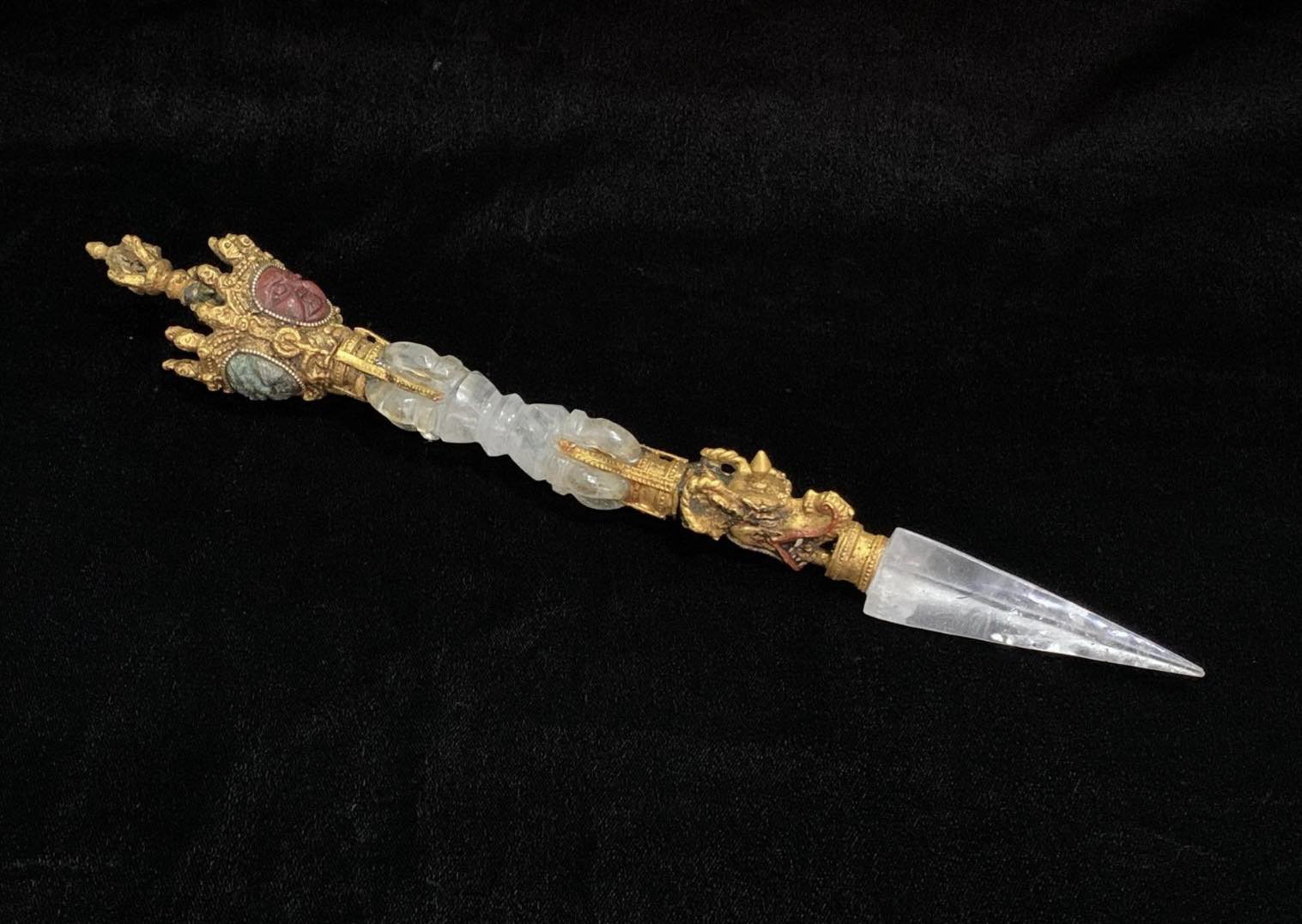
Mahakala Phurba Dagger

Copper with gold plated himalayan crystal mahakala phurba dagger. Behold a masterpiece that transcends mere metallurgy – a truly captivating ritual dagger, an artifact brimming with ancient mystique and breathtaking artistry! Every curve, every sculpted face, and every intricately coiled serpent on its handle tells a silent story, inviting you to delve into a world where craftsmanship meets profound spiritual tradition. This isn’t just an object; it’s a portable piece of history, an heirloom of intricate design that immediately commands attention.

What makes this ritual dagger so compelling? Its value lies in its exceptional detail and the rich cultural tapestry it represents. This isn’t a mass-produced item; it’s a unique creation, likely a Phurba, known for its symbolic power in certain spiritual practices. The multi-faceted blade and the highly ornate hilt, adorned with mythical figures and symbolic imagery, speak volumes about the artisan’s skill and the depth of the traditions it embodies. Whether you’re a collector of unique artifacts, an enthusiast of spiritual tools, or simply someone who appreciates unparalleled artistry, this dagger offers a profound connection to ancient cultures and a stunning visual spectacle that will elevate any collection or sacred space. It’s a powerful conversation starter, a focal point of meditation, and a tangible link to human creativity and belief systems.

We are absolutely thrilled to share this incredible piece with you, and we can’t wait to hear your thoughts! What aspect of this ritual dagger captures your imagination the most? Do you have a favorite detail in its intricate carvings? Perhaps you know more about the symbolism woven into its design? Share your insights, questions, and reactions in the comments below! Let’s spark a conversation about the beauty, history, and spiritual significance of such extraordinary artifacts. Your engagement helps us all appreciate these wonders even more! 

Hardware Wallets, Portfolio Signals, and Yield Farming: What Multi-Chain DeFi Users Actually Need

Whoa!

Okay, so check this out—I’ve been juggling hardware wallets and yield strategies for years now, and something felt off about how people mix security with yield chasing. My instinct said most folks choose convenience over safety. Initially I thought hardware wallets would stop a lot of rookie mistakes, but then I watched transactions signed on compromised hosts and sighed. On one hand hardware keys fix private key exposure, though actually they don’t stop every attack vector, far from it.

Really?

Yes. The simple truth is that a hardware wallet solves the “hot wallet” problem by keeping keys offline. But there are trade-offs. UX can be clunky across chains and bridges. The deeper issue is that cross-chain DeFi forces users to trust more layers, and those layers break assumptions of isolated key security.

Here’s the thing.

When you connect a hardware device to a multi-chain wallet, you’re signing transactions that may route through bridges, smart contracts, or aggregator contracts. That means a single signature can authorize complex flows that your eyes might not fully parse. So it’s not just “hold your seed”—it’s also “understand the contract you’re interacting with.” My bias is toward transparency over convenience, and that affects how I manage a diversified DeFi portfolio.

Hmm…

Portfolio management in DeFi is messy. Different chains, different token standards, different explorers. Tracking performance, unrealized gains, and risk exposure requires tooling that understands many ledgers. I like dashboards that consolidate positions without ever touching private keys, and I also like hardware-backed signatures for rebalancing. Oh, and by the way… alerts are underrated; they save you when an LP gets rug-pulled.

Whoa!

Yield farming sounds sexy. And it can be profitable. But it’s high friction and high risk. There are combinatorial hazards: impermanent loss, smart contract bugs, rug pulls, MEV extraction, and cross-chain bridging failures. The smartest farmers treat yield as a high-risk allocation, like venture capital on-chain, not a savings account.

Seriously?

Yes, seriously. Learn the counterparty chain—who’s deploying the contracts, who audits them, and whether there are timelocks or multisigs. Multisig is a huge positive for treasury-like behaviors, because it spreads signing power. But multisigs need hardware support too; think about co-signing with Ledger, Trezor, or other compatible devices. If a solution lacks robust hardware wallet integration, pause before depositing lots of funds.

Here’s the thing.

Not all hardware wallet integrations are created equal across platforms. Some wallets implement only basic signing flows, while others show full transaction details (method names, target addresses, calldata). The more your wallet can display, the safer you are. I test integrations by sending tiny transactions and inspecting raw calldata, because nothing beats a small-scale rehearsal before committing. (Yes, it’s tedious. Yes, it’s effective.)

Whoa!

For multi-chain users I want three practical capabilities from a wallet ecosystem: native hardware support, aggregated portfolio views, and secure on-ramp/off-ramp integration. These features together let you hold keys safely, see exposure across chains, and move funds between on-chain yield and an exchange when needed. And—full disclosure—I prefer solutions that let me trade or stake without exporting private keys to custodial services.

Really?

If you want a hands-on recommendation for blending exchange convenience with hardware security, consider using a wallet that bridges to an exchange via signed approvals, rather than handing over custody. A good example is how some users combine hardware wallets with exchange-native wallet services to keep custody and liquidity separate. I often route small rebalancing trades through an exchange interface while keeping the bulk of assets in cold storage.

Here’s the thing.

For readers who want to try a hybrid flow, check out the bybit wallet and see how it approaches exchange-wallet interplay without forcing custody transfer. Try the interface with tiny amounts first. My approach is pragmatic: use an exchange’s wallet features for quick trades, but keep your substantial positions secured in a hardware-backed wallet. I’m biased toward layering: hardware keys for custody, exchange rails for liquidity, and self-custody dashboards for oversight.

A hardware wallet plugged into a laptop with multiple chain tokens visible on screen

Practical Checklist: What to Do Today

Whoa!

Start with small tests. Send a micro-deposit across each chain you plan to use and then withdraw it. Watch how the signatures are shown on your hardware device and verify addresses. Use a read-only portfolio tool that never requires your seed. Consider a multisig for pooled funds, because a single-key cold wallet is too fragile for serious amounts. Also… keep an offline copy of your recovery phrase in two geographically separated spots; somethin’ like a safe and a trusted lawyer’s deposit box, if you’re that serious.

Really?

Yes. Also enable transaction whitelists where possible. Use contract allowlist features instead of blanket approvals when interacting with DEXes and farms. Approve specific amounts not infinite allowances. And rotate approvals regularly; it’s low friction but very very important. Finally, use privacy-smart practices when revealing addresses across public platforms.

Here’s the thing.

Yield farming admins sometimes change pools, add governance votes, or migrate contracts. Monitor governance proposals closely for pool migrations that could drain liquidity. If a migration is proposed, be suspicious until it’s validated by independent audits. My rule of thumb: trust audits but verify fund flows yourself. I’m not 100% sure about every audit firm, and you shouldn’t be either.

FAQ

How do hardware wallets interact with multi-chain DeFi?

They sign transactions locally and reveal only the public key to the host. This preserves private key secrecy while letting you authorize cross-chain interactions, but the host environment and the smart contract logic still matter; always review transaction details on-device when possible.

Can I manage my portfolio across chains without trusting an exchange?

Yes. Use read-only aggregation tools for visibility and hardware-backed wallets for custody. Use exchanges only for liquidity and short-term trades, while keeping larger, long-term holdings in cold storage.

Is yield farming worth the risk?

It can be, for a small allocation. Treat it like high-risk alpha-seeking. Diversify, use audited protocols, and consider impermanent loss hedges when staking liquidity. Expect surprises—smart contract risk is real and persistent.