
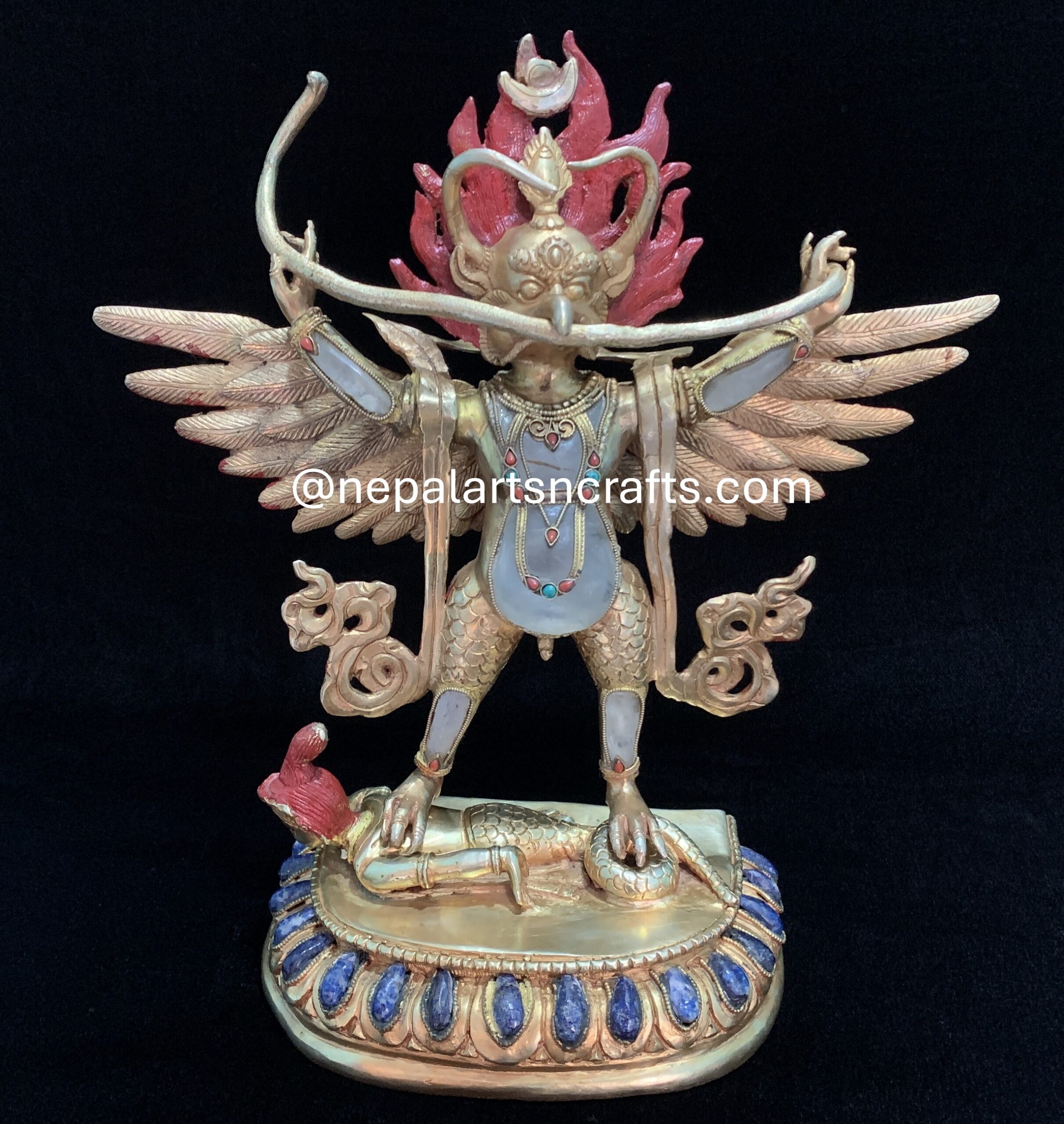
The Mythical Megastar Soaring Through Time and Culture
The Original Apex Predator, King of Birds, and a Divine Mount.
I. Introduction: Meet Garuda, The Original Apex Predator
Forget your fire-breathing dragons and self-immolating phoenixes for a moment! Let’s turn our gaze skyward to Garuda – the colossal, divine eagle-like sun bird. This being has been ruling not just the skies, but also hearts and minds for millennia.
More than just a mythical beast plucked from an ancient bestiary, Garuda is a spiritual superhero, the original apex predator, the ultimate “king of birds,” and a ride fit for a god (specifically, Vishnu!). Think of him as the celestial equivalent of a high-performance vehicle.
Prepare to dive into a tale of strength, devotion, and a rather serious rivalry with snakes. It’s a story that’s both deeply rooted in ancient lore and surprisingly relevant to our modern anxieties.
II. Ancient Wings: Garuda’s Epic Origin Story
- From Ancient Whispers to Epic Tales: Garuda’s origins are as vast and varied as the skies he commands. He can be traced back to the Vedas as Śyena, the swift eagle who snatches divine nectar, a symbol of aspiration and attainment. The name “Garuda” itself hints at his powerful nature, derived from the Sanskrit root meaning “to devour,” reflecting his formidable strength.
- The Mahabharata Saga: The Mahabharata unveils a dramatic narrative: Garuda’s birth and his heroic quest for amrita (the elixir of immortality). This wasn’t for personal gain; it was to free his enslaved mother, Vinata. Such profound filial devotion underscores a central theme in Garuda’s mythology – sacrifice for those you love.
- A Feathery Evolution: Over centuries, Garuda’s image underwent a fascinating transformation. Initially depicted as a purely giant bird, he gradually evolved into the iconic “bird-man” – a being with a human body, but retaining the eagle’s head, wings, and talons. This anthropomorphic shift reflects a nuanced understanding: divinity manifesting in a form relatable to humanity. Art, it seems, evolved as rapidly as the myth traveled across continents.
- Why the Snake Beef? The legendary wager between his mother, Vinata, and her sister Kadru (the mother of the Nagas) is the root of this eternal conflict. This single bet, born of deception, ignited a rivalry that continues to resonate in art, mythology, and even modern interpretations of overcoming inner demons.
III. Global Glamour: Garuda’s Influence Across Faiths
- Hinduism’s High-Flyer: In Hinduism, Garuda isn’t just a powerful figure; he’s the ultimate vahana (mount) of Lord Vishnu, one of the principal deities. He is the visible manifestation of courage, speed, and unwavering protection. More profoundly, he symbolizes the journey of the individual “self” (Atman) toward the “Supreme Self” (Paramatman). In essence, Garuda is Vishnu’s personal, divinely-engineered jet, effortlessly traversing cosmic distances.
- Buddhist Bird of Wisdom: Buddhism also embraces Garuda, portraying him as a golden-winged protector. He’s often depicted listening to Buddha’s sermons, an embodiment of attentiveness and receptivity to wisdom. Furthermore, he remains a fierce foe of the snakey Nagas, symbolizing the enlightened mind that conquers negativity and ignorance.
- Jainism’s Guardian Spirit: Jainism features Garuda as a yaksha (guardian spirit) for Tirthankara Shantinatha. Here, he offers unwavering support, power, and protection against evil influences. This cross-religious adoption speaks to Garuda’s universal appeal as a symbol of strength and safeguarding.
IV. Modern Marvel: Garuda in Today’s World
National Hero Status
- Indonesia’s Proud Emblem: The “Garuda Pancasila” is more than just a national symbol; it embodies the very essence of Indonesia’s identity. He represents freedom, strength, justice, and the nation’s “Unity in Diversity” philosophy. You’ll find him everywhere, from government buildings to the national airline – a constant reminder of the nation’s aspirations.
- Thailand’s Royal Icon: In Thailand, Garuda holds a sacred position as a symbol of the monarchy. He represents the king’s protective role and divine authority, a visual embodiment of the nation’s deep-rooted traditions.
- India’s Military Might: Even the Indian Air Force’s Garud Commando Force has adopted Garuda as their namesake, a testament to his enduring image as a symbol of strength, vigilance, and aerial prowess.
Towering Tributes
The colossal Garuda Wisnu Kencana statue in Bali isn’t just a tourist attraction; it’s a monumental homage to this mythical figure, a physical manifestation of devotion on a grand scale.
Pop Culture’s New Wings
From traditional shadow puppet theater (wayang kulit) to modern films, literature, and video games, Garuda continues to capture the imagination of creators and audiences alike. His enduring presence in pop culture solidifies his status as a timeless icon.
V. Feathered Fights: The Debates and Different Strokes
- Looks Can Be Deceiving (or Diverse!): Why does Garuda appear so different depending on geographic location and artistic interpretation? The debate between zoomorphic (all bird) and anthropomorphic (bird-man) depictions continues. The varying colors, from gold to red, further complicate the visual representation. These differences highlight the fluid nature of mythology, constantly adapting to cultural contexts.
- Sacred vs. Swag: When does popular appropriation and commercialization begin to dilute the profound spiritual significance of Garuda? This is a crucial question in our increasingly interconnected world. Is there a clear line between genuine appreciation and outright exploitation?
- National Narratives, Different Meanings: The contrast between Indonesia’s “Garuda Pancasila” (national strength, political stability) and Thailand’s Garuda (sacred, royal authority) reveals how a single symbol can carry distinct meanings within different national narratives.
- The Problem with Old Texts: Inconsistent stories and varying interpretations abound in ancient Puranas. Even back then, it seems, people couldn’t agree on every detail, proving that the beauty of mythology often lies in its ambiguity.
VI. Beyond the Horizon: Garuda’s Flight into the Future
- Archetype for Modern Times: Garuda is increasingly becoming a symbol for personal liberation. His story resonates with those seeking to overcome anxiety, gain a higher perspective on life’s challenges, and transform negative emotions into positive action. He embodies the inner spiritual warrior within us all.
- Green Wings for the Planet: Emerging interpretations are linking Garuda to environmentalism and wildlife conservation, casting him as a protector of nature. This is a potent evolution, imbuing an ancient myth with contemporary relevance.
- Keeping the Myth Alive: Efforts are underway to create new narratives and artistic representations to introduce Garuda to younger generations, ensuring that his legacy endures. This includes modernizing the storytelling while preserving the core values and symbolism.
- Crossing Borders: Expect Garuda to influence more transnational cultural exchanges, spreading his powerful message even further. As the world becomes more interconnected, Garuda’s universal appeal will likely transcend geographical boundaries.
- Real-World Airlines Soaring: Garuda Indonesia isn’t just a name; the airline itself has ambitious plans for fleet expansion and new routes, carrying the name proudly into the future sky! This demonstrates how the myth continues to inspire tangible endeavors.
VII. Conclusion: The Ever-Soaring Legend
From ancient texts to national emblems, from spiritual guide to pop culture icon, Garuda proves that some myths never truly fade. They evolve, adapt, and continue to inspire across generations.
He embodies strength, freedom, devotion, and a relentless spirit. So, next time you see an eagle soaring through the sky, remember the legendary Garuda – a symbol that continues to inspire and evolve, truly a megastar of myth.