
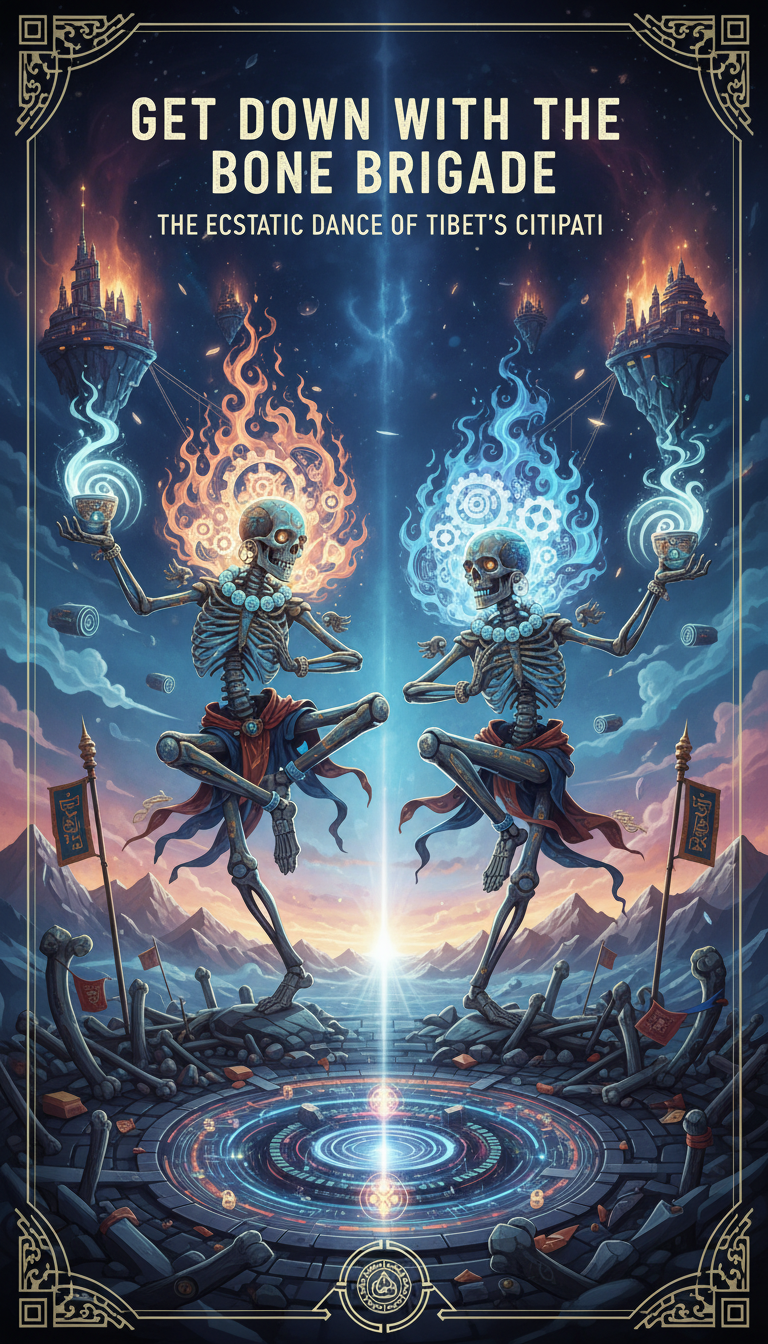
Get Down with the Bone Brigade: The Ecstatic Dance of Tibet’s Citipati
Unveiling the fierce and elegant skeletal protectors, the “Lords of the Charnel Ground,” and their profound message of liberation.
Imagine a dance so ancient, so resonant with the heartbeat of existence, that its performers are…skeletons. Not the ghoulish kind haunting Halloween aisles, but something far more profound. Meet the Citipati, the “Lords of the Charnel Ground,” fierce and elegant skeletal protectors from the heart of Tibetan Buddhism. Their dance is not a celebration of death, but a defiant embrace of freedom. Let’s delve into their story, their mesmerizing moves, and uncover why these bone-chilling figures might just warm your soul.
So, Who Exactly Are These Dancing Skeletons?
At their core, the Citipati are a dynamic duo: a male and female pair locked in perpetual, ecstatic dance. They are Dharmapalas, guardians of the Buddhist teachings, revered throughout Vajrayana Buddhism. Their very essence is a cosmic nudge, a reminder that life is fleeting, death an inevitable truth, and detachment the ultimate liberation.
Observe their dance; one leg is raised high, a gesture of transcendence, while the other remains grounded, tethered to the earthly realm. It’s the ultimate expression of balance – the delicate dance between life and death. And just to clarify, while we’re talking skeletons, these aren’t the dinosaur Citipati – a completely different entity, equally fascinating, but decidedly less inclined to dance.
“Death isn’t an ending here; it’s a dramatic costume change.”
– The Essence of Citipati
The Story of Bone Rhythms
The story of these bone rhythms stretches back through time, from ancient India to the roof of the world. These skeletal guardians journeyed from the wellsprings of Vajrayana Buddhism to become pivotal figures in Himalayan tradition. The origin story is…well, let’s call it vividly transformative. Legend speaks of two meditating monks, disturbed by a thief, who in a moment of unexpected spiritual combustion, transformed into eternal protectors. Death isn’t an ending here; it’s a dramatic costume change.
Then there’s Guru Padmasambhava, who in the 8th century, orchestrated a spiritual rave of sorts, bringing and adapting these “skeleton dances” to Tibet. His intention was never to instill fear, but to subdue evil and safeguard the Dharma. Monks keep this tradition alive, diligently performing elaborate “Tsam dances” twice a year in charnel grounds, accompanied by the haunting resonance of bone trumpets and the thunderous beat of drums. It’s a living, breathing meditation, a testament to the enduring power of ritual.
More Than Just Macabre Figures
But the Citipati are so much more than macabre figures. Their skeletal form, stripped bare of flesh and ego, lays bare the fundamental truth of impermanence. Their dance, “ecstatic” and “wild,” is a celebration of conquering fear, of finding freedom within the cycle of life, death, and rebirth. They are fierce protectors, spiritual bodyguards for practitioners, warding off ignorance and guiding souls through the treacherous Bardo, the in-between state.
Look closely at their iconography. The wisdom flames that lick around their skulls symbolize enlightenment emerging from the ashes of impermanence. The skull cups they hold may represent offerings, or perhaps a symbolic sip of wisdom. Their necklaces of human heads are trophies, emblems of conquered ego. And the union of male and female embodies the ultimate tantric dance of compassion and wisdom, a harmonious merging of opposing forces.
Misunderstood Guardians
Yet, these figures are often misunderstood, viewed through the lens of Western sensibilities as macabre or evil. Outsiders may perceive them as creepy or a bad omen, a complete misinterpretation of their benevolent, protective role. Their fierce appearance is a tool, a means to confront and ultimately dismantle fear, not to instill it.
It’s crucial to differentiate the Citipati from other skeleton dancers in the broader Cham tradition. They possess a unique narrative and distinct sacred duties. Intriguingly, there are no major internal debates or controversies surrounding their authentic meaning within Buddhist traditions. The challenges primarily revolve around educating those who haven’t yet grasped their profound significance.
Modern Echoes and Future Strides
The Citipati’s skeletal strides continue to reverberate in the modern world. The traditional rituals are meticulously preserved, particularly in Tibet, India, and Nepal. Monastic dance troupes are now taking their performances to international stages, sharing their culture, promoting the Dharma, and raising vital funds.
Western culture has also begun to embrace the Citipati, with their iconography appearing in meditation rooms, yoga studios, contemporary art, meaningful jewelry, and even tattoos. They’ve become more than just artistic representations; for many, they are living protectors. While preserving the sacred core, Tibetan dance is also evolving, with artists creating fusions that blend traditional moves with ballet, modern, and even street dance. Imagine a “Citipati hip-hop fusion” – perhaps not so far-fetched!
However, challenges remain: the immense cost of maintaining rituals, the potential loss of ancient dance manuals and the masters who hold them, and the delicate balance between cultural sharing and the risk of dilution into mere tourist spectacle. Yet, with dedicated monastics, a growing global interest in Tibetan spirituality, and creative adaptations, there is hope that these dancing skeletons will continue to inspire future generations with their timeless message.
Embrace the Ecstatic Freedom
The dance of the Citipati is a testament to the profound beauty and meaning that can be found in the most unexpected places. They challenge us to look beyond superficial appearances and embrace the full spectrum of existence, from the radiant heights of life to the shadowy depths of death. Their dance is an eternal invitation: release your fears, let go of your attachments, and discover your own ecstatic freedom.